
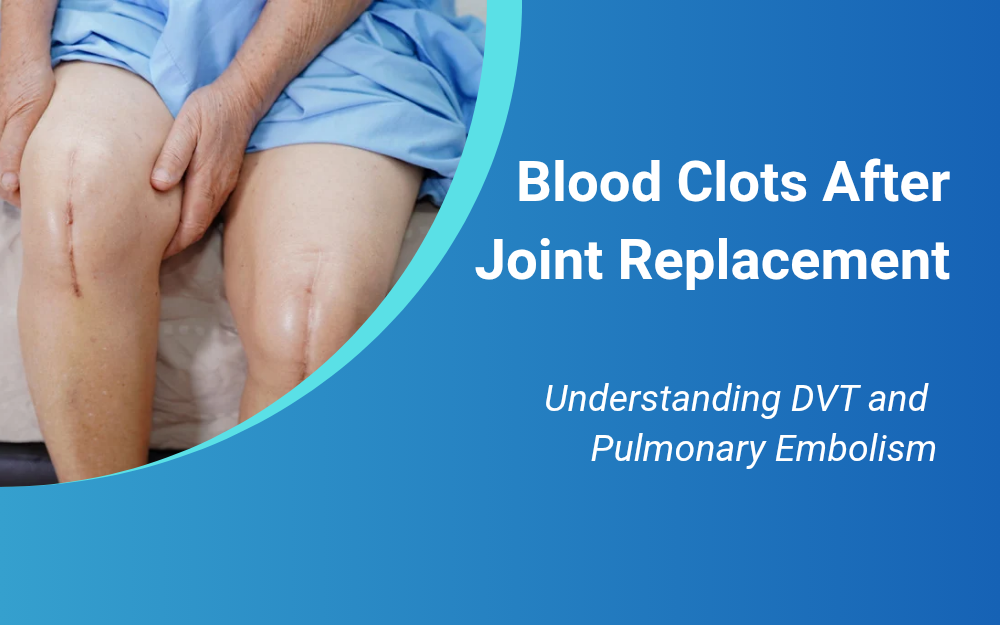
For many people living with severe joint arthritis, the decision to undergo replacement surgery is life-changing. Yet one concern often holds patients back: What about blood clots?
Blood clots, specifically Deep Vein Thrombosis (DVT) and Pulmonary Embolism (PE), are among the most discussed complications after joint replacement. The good news? Modern prevention protocols have dramatically reduced these risks, and when patients understand the science, symptoms, and strategies, they can actively participate in their own safety.
As Dr. Narayan Hulse emphasises in his book Joint Replacements: A Patient’s Handbook, a well-informed patient is the cornerstone of successful recovery.
What Are DVT and PE?
Deep Vein Thrombosis (DVT): A blood clot that forms in a deep vein, usually in the calf or thigh. The leg may swell, feel warm, or ache, but some DVTs have no symptoms.
Pulmonary Embolism (PE): A clot breaks loose, travels through the bloodstream, and lodges in the lungs, blocking blood flow. This is a medical emergency. Signs include:
- Sudden shortness of breath
- Sharp chest pain (especially when breathing deeply)
- Rapid or irregular heartbeat
- Coughing up blood
- Dizziness or fainting
Not every DVT leads to PE, and not every PE is fatal,l but both require immediate recognition and treatment.
CTA: Concerned about your clot risk before surgery? Book a consultation with Dr. Hulse to review your personal risk factors.
Why Joint Replacement Raises Clot Risk
Surgery creates conditions that favour clot formation through three mechanisms known as Virchow’s triad:
- Slowed blood flow: Anesthesia and immobility during and after surgery reduce venous return from the legs.
- Blood vessel injury: Surgical instruments and bone preparation can irritate vessel walls.
- Increased clotting factors: The body’s healing response triggers inflammation and clot formation.
Hip and knee replacements specifically involve manipulation near large veins and require temporary reduced leg movement—both of which elevate risk.
How Common Are Blood Clots Today?
Without prevention, older data showed alarming rates:
- DVT: 40–80% of patients
- PE: 10–20% of patients
With modern prophylaxis protocols, these numbers have dropped significantly:
- Symptomatic DVT: 0.5–4%
- Symptomatic PE: 0.3–1.7%
- Fatal PE: Less than 0.5%
These reductions come from mechanical devices, medications, early mobilization, and patient vigilance—elements built into every case.
Prevention: A Multi-Layered Approach
Effective clot prevention isn’t a single pill or device—it’s a coordinated system.
Mechanical Prophylaxis
- Sequential compression devices (SCDs) worn during and after surgery
- Compression stockings to support venous flow
- Foot pumps that mimic natural muscle action
Early Mobilization
Movement is the best natural defence. Patients typically:
- Walk with support on the same day or the next morning
- Progress to short, frequent walks within days
- Activate calf muscles—the body’s built-in pumps
Who Is at Higher Risk?
Risk varies by patient. Factors include:
- Age over 60
- Obesity (BMI over 30)
- Prior history of blood clots
- Genetic clotting disorders (Factor V Leiden, prothrombin mutations)
- Active cancer or recent chemotherapy
- Smoking
- Prolonged immobility
- Hormone therapy
Dr. Hulse’s handbook emphasizes that understanding these factors helps tailor prevention strategies to each individual.
DVT Symptoms
- New or worsening calf or thigh pain in one leg
- Swelling in one leg more than the other
- Warmth, redness, or tenderness over a vein
- A cord-like structure under the skin
PE Symptoms (Medical Emergency)
- Sudden shortness of breath
- Sharp chest pain (worse with breathing)
- Rapid heartbeat
- Coughing up blood
- Dizziness or fainting
Don’t wait—with PE, minutes matter. Seek emergency care immediately.
Duration of Risk: How Long to Stay Vigilant
Clot risk is highest in the first 2 weeks post-surgery but remains elevated for 6–12 weeks.
That’s why:
- Prophylaxis typically continues for 4–6 weeks
- Long flights or car trips should include frequent walking breaks
- Vigilance for symptoms remains important even after medication stops
Most patients return to baseline risk by three months post-surgery.
How Surgical Technique Helps
Modern surgical approaches reduce clot risk:
- Minimally invasive techniques: Less tissue trauma
- Regional anesthesia: Preserves leg muscle tone
- Tranexamic acid (TXA): Reduces bleeding without increasing clot risk
- Robotic precision: Efficient operative time minimizes immobility
Blood clots are a real risk, but they are manageable. The combination of mechanical devices, medication, early walking, and patient vigilance has made joint replacement one of the safest elective surgeries in modern medicine.
Understanding risk isn’t about fear; it’s about empowerment. When you know what to watch for and what to do, you become an active partner in your recovery.
Ready to understand your personal clot risk and prevention plan? Start your journey by scheduling a visit with Dr. Hulse to create a surgical plan tailored to your unique health needs. To learn more about what to expect, explore the expert advice shared in his book, Joint Replacements: A Patient’s Handbook, at https://drhulse.com/joint-replacement-book/.