
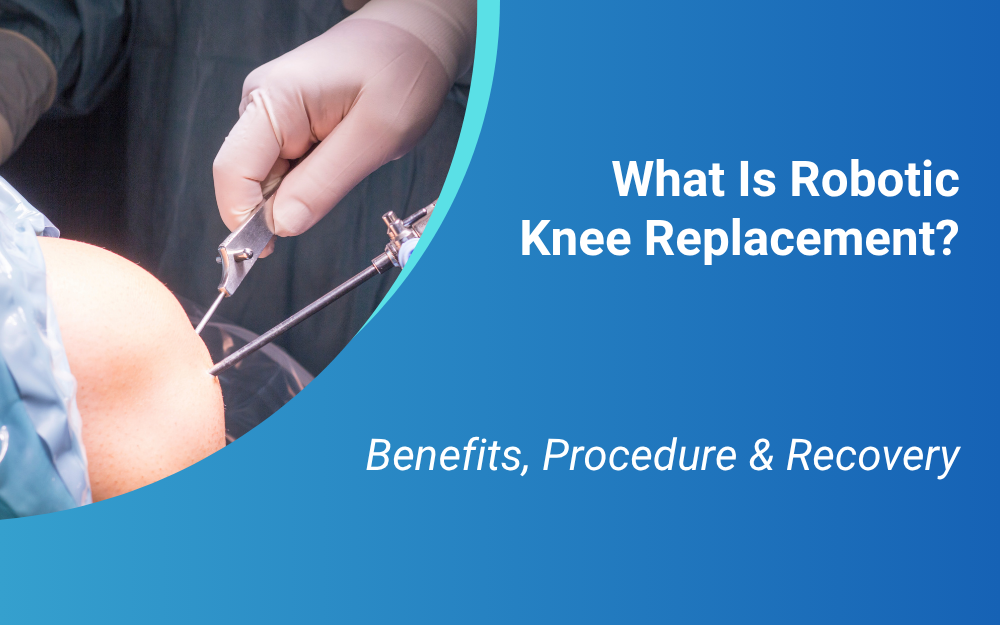
What Is Robotic Knee Replacement? Benefits, Procedure & Recovery
Robotic knee replacement is a minimally invasive surgical procedure in which a robotic system assists the surgeon in removing damaged knee tissue and placing the artificial joint implant with greater precision than traditional surgery. It results in less pain, faster recovery, and a more natural-feeling knee.
What Is Robotic Knee Replacement?
Robotic knee replacement uses advanced robotic technology — such as MAKO, NAVIO, or ROSA — to help the surgeon plan and perform the procedure with pinpoint accuracy. Before surgery, a 3D model of your knee is created. During surgery, the robotic arm guides the surgeon to remove only the damaged tissue while protecting healthy bone and ligaments.
This is different from traditional knee replacement, where the surgeon works entirely by hand without real-time digital guidance.
Dr. Narayan Hulse performs robotic knee replacement in Bangalore using MAKO, NAVIO, and ROSA robotic systems — making him one of the few surgeons in the region with experience across all three platforms.
Can Robotic Knee Replacement Help Knee Cap Pain?
Robotic knee replacement may help patients suffering from severe knee cap pain caused by arthritis, worn cartilage, or patellofemoral joint damage. Using advanced robotic technology, the surgeon can precisely assess and treat damaged areas around the knee cap while preserving healthy bone and tissue.
Common causes of knee cap pain include:
- Arthritis behind the knee cap
- Worn cartilage
- Knee cap misalignment
- Injury or overuse
- Patellofemoral arthritis
In advanced cases where non-surgical treatments no longer provide relief, robotic knee replacement may improve movement and reduce pain significantly.
Benefits of Robotic Knee Replacement
Robotic knee replacement offers significant advantages over traditional surgery:
- Greater precision — the robotic system creates a 3D map of your knee before surgery, ensuring the implant fits your exact anatomy
- Less bone and tissue damage — only damaged areas are removed, healthy tissue is preserved
- Faster recovery — patients typically return to daily activities sooner after robotic knee replacement
- Reduced pain after surgery — less trauma to surrounding tissue means less post-operative discomfort
- More natural knee feel — better implant alignment means the knee moves more naturally
- Lower risk of complications — reduced risk of implant misalignment and early loosening
- Suitable for knee cap issues — robotic precision helps in cases where the knee cap surface also needs treatment
Expert Advice from Dr. Narayan Hulse
“Proper physiotherapy, early walking, and consistent rehabilitation exercises are essential for improving robotic knee replacement recovery time and achieving long-term success after surgery.”
— Dr. Narayan Hulse, Senior Director of Orthopaedics, Fortis Hospitals Bangalore
How Is Robotic Knee Replacement Performed?
The robotic knee replacement procedure involves four key stages:
Stage 1 — Pre-surgery Planning A CT scan of your knee is taken. The robotic software creates a personalised 3D model of your joint. Dr. Hulse uses this to plan the exact size, position, and angle of the implant before entering the operating theatre.
Stage 2 — Surgery Begins A small incision is made at the front of the knee. The robotic arm is activated and provides real-time guidance throughout the procedure.
Stage 3 — Damaged Tissue Removed The robotic system guides Dr. Hulse to remove only the damaged cartilage and bone. The knee cap surface is also assessed and treated if needed.
Stage 4 — Implant Placement The artificial implant is placed with robotic precision. The system confirms correct alignment before the incision is closed.
Total surgery time is typically 60 to 90 minutes.
Robotic Knee Replacement Recovery
Robotic knee replacement recovery is generally faster than traditional surgery due to reduced tissue trauma.
Week 1: Walking begins within 24 hours with a walker. Pain is managed with medication. Physiotherapy starts immediately.
Week 2–4: Most patients go home within 3 days. Swelling reduces. Walking distance increases gradually.
Week 4–6: Walking without aids becomes possible. Light daily activities resume. Driving is not yet permitted.
Month 3: Most patients return to normal daily life. Knee cap discomfort, if present before surgery, significantly reduces.
Month 6–12: Full recovery. The implant settles completely. Most patients report excellent pain relief and improved mobility.
Who Is a Good Candidate for Robotic Knee Replacement?
Robotic knee replacement is suitable for:
- Patients with severe knee arthritis not responding to medication
- Individuals with knee cap damage or patellofemoral arthritis
- Patients who want a faster, more precise surgical outcome
- Active individuals who want to return to a healthy lifestyle sooner
- Patients requiring partial knee replacement — where robotic precision is especially valuable
Conclusion
Robotic knee replacement represents the most advanced approach to treating severe knee pain and arthritis today. With greater precision, faster recovery, and better long-term outcomes, it is the preferred choice for patients who want the best possible result.
Whether your pain is coming from general knee arthritis or specifically from knee cap damage, Dr. Narayan Hulse offers world-class robotic knee replacement using the latest technology.
About Dr Hulse
Dr. Narayan Hulse is a Senior Orthopaedic and Joint Replacement Surgeon with over 7,000 successful joint replacement surgeries to his credit. He specialises in robotic knee replacement, total knee replacement, and minimally invasive orthopaedic procedures.
Currently serving as the Senior Director of Orthopaedics at Fortis Hospitals, Bangalore, Dr. Hulse is widely recognised for his expertise in advanced robotic-assisted knee replacement techniques that support faster recovery and improved mobility for his patients.
📞 Book a consultation: drhulse.com/appointment-booking
Frequently Asked Questions
What is robotic knee replacement?
Robotic knee replacement is a surgical procedure where a robotic system assists the surgeon to place the knee implant with greater accuracy than traditional methods, using a 3D model of the patient’s knee.
Is robotic knee replacement better than traditional knee replacement?
Yes, in most cases. Robotic knee replacement offers better implant alignment, less tissue damage, and faster recovery compared to traditional knee replacement surgery.
What causes knee cap pain?
Knee cap pain is caused by worn cartilage, misalignment, arthritis, or injury affecting the patella. In severe cases, robotic knee replacement may be recommended.
How long does robotic knee replacement surgery take?
Robotic knee replacement surgery typically takes 60 to 90 minutes, depending on the complexity of the case.
How long is recovery after robotic knee replacement?
Most patients return to daily activities within 6 weeks. Full robotic knee replacement recovery takes 6 to 12 months.
Does robotic knee replacement treat knee cap problems?
Yes. During robotic knee replacement, the knee cap surface is assessed and treated if damaged, providing comprehensive relief.