
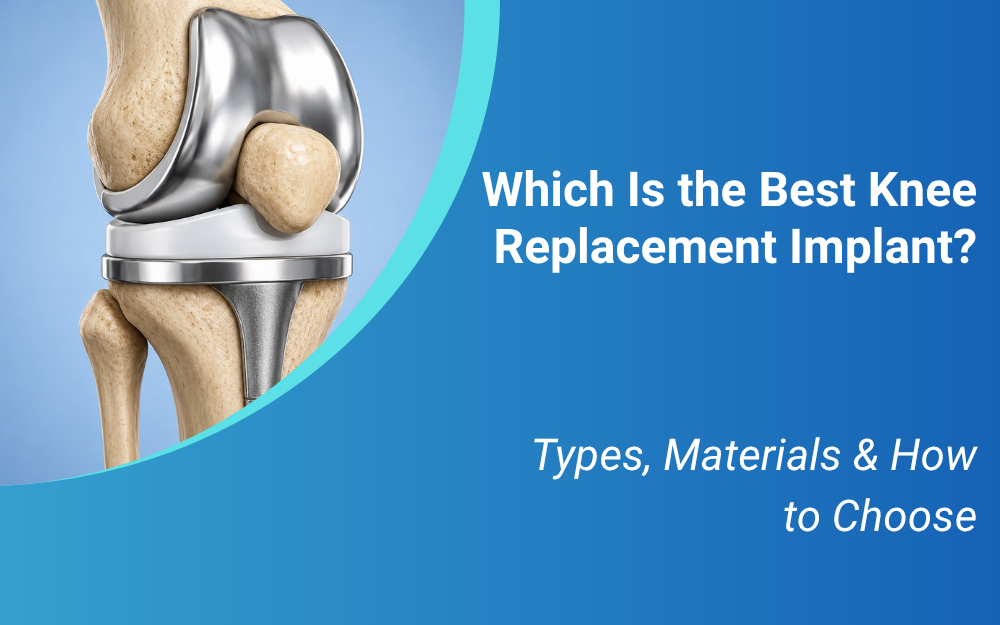
The best knee replacement implant depends on a patient’s age, activity level, bone quality, knee anatomy, and overall health. There is no single implant that is ideal for everyone. Modern implants made from advanced materials can provide long-lasting pain relief, improved mobility, and excellent function when selected appropriately by an experienced orthopedic surgeon.
What Is a Knee Replacement Implant?
A knee replacement implant is an artificial device used to replace damaged portions of the knee joint during total knee replacement surgery. The implant is designed to restore smooth movement, reduce pain, improve stability, and help patients return to daily activities when arthritis or joint damage severely affects knee function.
Why Is Choosing the Right Knee Replacement Implant Important?
The right implant can significantly influence comfort, movement, implant longevity, and overall recovery. Choosing an implant that matches a patient’s anatomy and lifestyle helps improve joint function, supports better mobility, and may reduce the risk of complications or revision surgery in the future.
What Are the Different Types of Knee Replacement Implants?
Fixed-Bearing Knee Implant
A fixed-bearing implant is the most commonly used total knee replacement implant. The plastic insert remains fixed to the metal component, providing reliable stability and durability. It is often recommended for patients with average activity levels and has an excellent long-term success record.
Mobile-Bearing Knee Implant
A mobile-bearing implant allows slight rotation of the plastic insert, which may improve movement and reduce wear in selected patients. It is generally considered for younger or more active individuals who require greater flexibility and range of motion.
Posterior-Stabilized Implant
Posterior-stabilized implants are designed for patients whose posterior cruciate ligament is damaged or removed during surgery. A specialized design helps maintain knee stability and supports smooth bending and walking after knee replacement.
What Is a Cruciate-Retaining Implant?
Cruciate-retaining implants preserve the patient’s posterior cruciate ligament. These implants aim to maintain more natural knee movement and may be suitable when the ligament remains healthy and functional.
What Materials Are Used in Knee Replacement Implants?
Modern knee implant materials are designed to be durable, biocompatible, and resistant to wear.
| Material | Advantages | Common Use |
| Cobalt Chromium | Strong, durable, wear resistant | Most knee replacements |
| Titanium | Lightweight, biocompatible | Implant components |
| Ceramic | Smooth surface, low wear | Selected advanced implants |
| Polyethylene | Shock absorption, smooth movement | Insert between metal components |
Which Knee Replacement Implant Lasts the Longest?
The longest lasting knee replacement implant depends on implant design, surgical technique, patient activity level, and rehabilitation. Modern implants commonly last 15–20 years or longer. Advances in implant materials and robotic-assisted surgery have further improved durability and long-term performance.
Cemented vs Cementless Knee Replacement Implants: What Is the Difference?
| Feature | Cemented Implant | Cementless Implant |
| Fixation Method | Bone cement | Natural bone growth |
| Recovery | Often predictable | Depends on bone quality |
| Ideal Patient | Older adults | Younger patients |
| Longevity | Excellent track record | Excellent when bone quality is good |
| Bone Integration | Not required | Required |
Both options can provide excellent outcomes when selected appropriately.
Are Robotic Knee Replacement Implants Better?
The implant itself is not necessarily different, but robotic technology helps surgeons position the implant with greater precision. Improved alignment may contribute to better joint mechanics, implant performance, and patient satisfaction. Robotic-assisted surgery also supports personalized surgical planning.
Which Knee Replacement Implant Is Best for Elderly Patients?
For many elderly patients, cemented implants are commonly recommended because they provide immediate fixation and predictable outcomes. The final decision depends on bone quality, overall health, activity level, and individual treatment goals.
Which Knee Replacement Implant Is Best for Younger Patients?
Younger and more active patients may benefit from implant designs that prioritize durability and long-term performance. Implant selection depends on lifestyle demands, bone quality, anatomy, and future activity expectations rather than age alone.
How Do Orthopedic Surgeons Choose the Best Implant for Knee Replacement?
Factors considered include:
- Patient age and expected activity level
- Bone quality and density
- Severity of arthritis
- Body weight and overall health
- Knee anatomy and alignment
- Previous surgeries or injuries
- Long-term mobility goals
A personalized approach helps achieve the best possible outcome.
What Are the Signs of a Successful Knee Replacement?
- Significant reduction in knee pain
- Improved walking ability
- Better joint stability
- Increased range of motion
- Improved sleep quality
- Greater independence in daily activities
- Return to recreational activities
- Long-term implant satisfaction
When Should You See a Knee Replacement Specialist?
- Persistent knee pain despite treatment
- Difficulty walking or climbing stairs
- Severe arthritis affecting daily life
- Knee stiffness limiting movement
- Recurrent swelling and inflammation
- Reduced quality of life
- Failure of medications, injections, or physiotherapy
Advanced Knee Replacement Implants vs Standard Implants
| Feature | Advanced Implant | Standard Implant |
| Durability | Enhanced materials | Traditional materials |
| Motion | Improved kinematics | Standard movement |
| Precision | Often used with robotic systems | Conventional placement |
| Technology | Advanced design features | Traditional design |
| Personalization | Greater customization options | Standard sizing |
| Cost | Higher | Lower |
About Dr. Narayan Hulse
Dr. Narayan Hulse is a Senior Orthopaedic and Joint Replacement Surgeon with 7,000+ successful joint replacement surgeries to his credit. He specializes in robotic knee replacement, total knee replacement, and advanced minimally invasive orthopedic procedures.
Currently serving as Senior Director of Orthopaedics at Fortis Hospitals, Bangalore, Dr. Narayan Hulse is recognized for his expertise in robotic-assisted joint replacement surgery and rehabilitation-focused orthopedic care.
Book a consultation:
https://drhulse.com/appointment-booking
Conclusion
With the right implant selection and surgical technique, most patients can achieve excellent pain relief, improved mobility, and long-term joint function.
Choosing the best knee replacement implant requires careful evaluation of age, activity level, bone health, and individual goals.
Experiencing chronic knee pain or considering knee replacement surgery in Bangalore? Schedule a consultation with Dr. Narayan Hulse for a personalized evaluation and treatment plan.
Frequently Asked Questions
Q1. Which is the best knee replacement implant?
There is no universal best implant for every patient. The ideal implant depends on age, bone quality, activity level, knee anatomy, and surgical goals. A personalized evaluation helps determine the most appropriate implant for long-term success.
Q2. How long do knee implants last?
Most modern implants last 15–20 years or longer. Longevity depends on implant quality, surgical technique, rehabilitation, body weight, and activity level.
Q3. Is a ceramic implant better than a metal implant?
Ceramic implants may offer lower wear in some situations, while metal implants have a long track record of durability and reliability. Both can provide excellent outcomes when used appropriately.
Q4. Are robotic knee replacement implants better?
Robotic technology improves implant positioning accuracy rather than changing the implant itself. Precise placement may improve joint alignment and long-term performance.
Q5. Which implant is best for active patients?
Active patients often require durable implants designed to handle higher activity levels. The best choice depends on lifestyle, anatomy, and surgeon recommendations.
Q6. What is the safest knee implant material?
Cobalt chromium, titanium, ceramic, and polyethylene are commonly used materials with excellent safety records and long-term clinical success.
Q7. Can knee implants last more than 20 years?
Yes. Many modern implants can last more than 20 years when properly implanted and maintained with healthy lifestyle habits.
Q8. Which implant is best for elderly patients?
Many elderly patients benefit from cemented implants because they provide immediate fixation and predictable outcomes. Individual evaluation remains essential.