
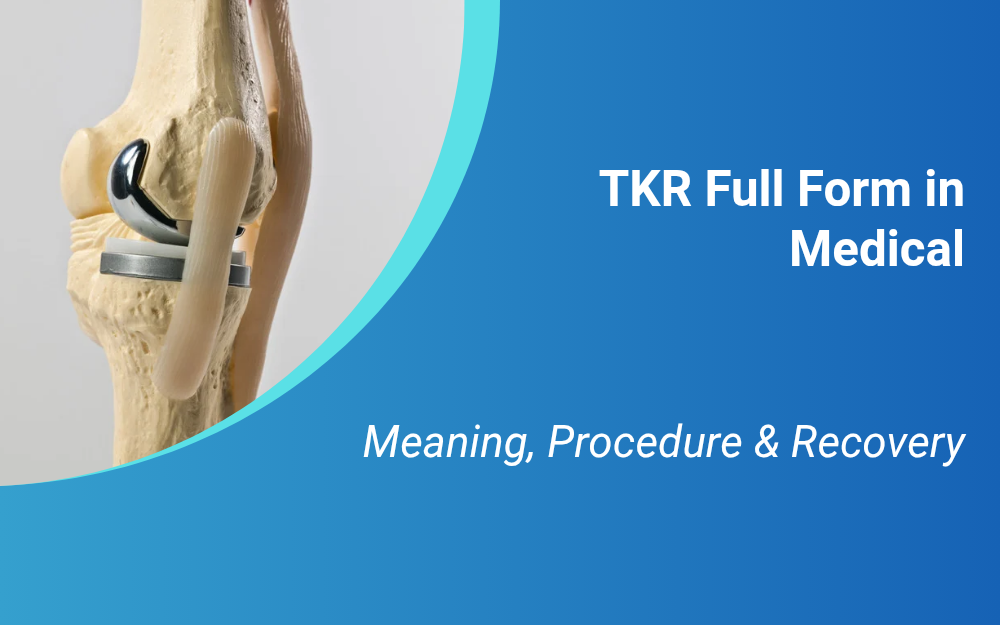
TKR full form in medical stands for Total Knee Replacement, a surgical procedure used to replace damaged knee joint surfaces with artificial implants. TKR surgery is commonly recommended for patients with severe arthritis, chronic knee pain, stiffness, and difficulty walking when non-surgical treatments no longer provide relief.
What Is the Full Form of TKR in Medical?
The full form of TKR in medical is Total Knee Replacement.
It is an orthopedic surgery performed to replace worn-out or damaged parts of the knee joint with artificial implants made of metal, ceramic, or medical-grade plastic.
TKR surgery is usually recommended for patients experiencing:
- Severe knee arthritis
- Chronic knee pain
- Difficulty walking
- Knee stiffness
- Reduced mobility
- Joint deformity
The procedure helps improve movement, reduce pain, and restore quality of life.
Why Is TKR Surgery Done?
Total Knee Replacement surgery is typically performed when knee damage becomes severe and affects daily activities.
Common reasons for TKR surgery include:
- Osteoarthritis
- Rheumatoid arthritis
- Knee joint degeneration
- Severe cartilage wear
- Chronic inflammation
- Knee deformity
- Failed conservative treatment
Patients often choose surgery after medications, injections, and physiotherapy stop providing relief.
What Happens During Total Knee Replacement Surgery?
During TKR surgery, damaged portions of the knee joint are carefully removed and replaced with artificial implants.
The procedure generally includes:
- Removing damaged cartilage and bone
- Preparing the joint surfaces
- Positioning artificial knee implants
- Restoring joint alignment
- Testing knee movement and stability
The goal is to create a smooth, stable, and pain-free joint movement.
Which Symptoms May Indicate the Need for TKR Surgery?
Common symptoms include:
- Persistent knee pain
- Pain while walking or climbing stairs
- Knee stiffness in the morning
- Swelling around the joint
- Difficulty standing for long periods
- Reduced knee movement
- Knee deformity or bowing
An orthopedic evaluation and imaging tests help determine whether knee replacement is necessary.
What Is the Recovery Timeline After TKR Surgery?
| Recovery Stage | Timeline | Main Recovery Goal |
| Early Recovery | Week 1–2 | Reduce pain and swelling |
| Walking Recovery | Week 2–6 | Improve walking ability |
| Strengthening Phase | Month 2–3 | Improve muscle strength |
| Functional Recovery | Month 3–4 | Improve mobility and balance |
| Advanced Recovery | Month 4–6 | Resume active lifestyle |
| Long-Term Recovery | 6–12 months | Maximum joint improvement |
Recovery speed varies depending on age, rehabilitation consistency, muscle strength, and overall health.
What Exercises Are Recommended After TKR Surgery?
Rehabilitation exercises help restore strength, flexibility, and knee movement after surgery.
Common TKR recovery exercises include:
- Ankle pumps
- Heel slides
- Straight leg raises
- Quad strengthening
- Stationary cycling
- Walking exercises
- Balance training
Physiotherapy is an essential part of successful knee replacement recovery.
What Are the Benefits of Total Knee Replacement?
| Benefit | How It Helps Patients | Long-Term Impact |
| Pain Relief | Reduces chronic joint pain | Improves comfort |
| Better Mobility | Improves walking ability | Restores independence |
| Improved Stability | Reduces knee buckling | Safer movement |
| Better Sleep | Reduces night pain | Improves quality of life |
| Increased Activity | Supports daily movement | Encourages active lifestyle |
| Joint Function Improvement | Restores knee mechanics | Long-term mobility support |
Many patients report significant improvement in mobility and daily comfort after recovery.
How Long Does It Take Elderly Patients to Recover After TKR?
Elderly patients often recover gradually over several months after Total Knee Replacement surgery.
Most elderly patients may:
- Begin walking within days
- Improve mobility within 6–12 weeks
- Continue strengthening for several months
- Experience full recovery within 6–12 months
Structured rehabilitation and physiotherapy are especially important for older adults.
What Activities Should Be Avoided After TKR Surgery?
Certain activities may place excessive stress on the artificial knee joint.
| Activity to Avoid | Why It Can Be Harmful | Safer Alternative |
| Running | High implant stress | Walking |
| Jumping sports | Increased joint impact | Cycling |
| Heavy lifting | Excessive knee pressure | Controlled strengthening |
| Deep squatting | Increased implant strain | Partial squats |
| Sudden twisting | Risk of instability | Guided physiotherapy |
| Ignoring rehab | Delayed recovery | Structured exercise program |
Following orthopedic advice helps improve long-term implant durability.
Is TKR Surgery Safe?
Total Knee Replacement is considered a commonly performed and generally safe orthopedic procedure when done by experienced surgeons with proper rehabilitation support.
Modern techniques, improved implants, and rehabilitation protocols have helped improve:
- Surgical precision
- Recovery outcomes
- Implant longevity
- Mobility restoration
- Pain management
However, every surgery carries risks that should be discussed during consultation.
When Should You Consult an Orthopedic Specialist?
You should consider orthopedic evaluation if you experience:
- Persistent knee pain
- Difficulty walking
- Knee stiffness affecting daily life
- Reduced mobility
- Pain despite medications
- Knee swelling and deformity
- Difficulty climbing stairs
Early treatment planning may help improve long-term joint outcomes.
Conclusion
With modern orthopedic techniques and structured rehabilitation, Total Knee Replacement surgery can significantly improve mobility, reduce chronic knee pain, and restore daily function for patients with severe knee joint damage.
Understanding the TKR full form in medical, the procedure, and the recovery process helps patients make informed treatment decisions and prepare for successful rehabilitation outcomes.
Experiencing persistent knee pain or difficulty walking? Schedule a consultation with Dr. Hulse for a detailed orthopedic evaluation and personalized treatment plan.
Frequently Asked Questions About TKR
What is the full form of TKR in medical terms?
The full form of TKR in medical terminology is Total Knee Replacement. It is a surgical procedure used to replace damaged knee joint surfaces with artificial implants to reduce pain and improve mobility in patients with severe knee arthritis or joint degeneration.
How painful is recovery after TKR surgery?
Some pain and swelling are expected during the early recovery phase after Total Knee Replacement surgery. However, medications, physiotherapy, and rehabilitation exercises help manage discomfort effectively. Most patients gradually experience improved mobility and reduced pain over time.
How long does TKR recovery take?
Most patients recover significantly within 3–6 months after surgery, although complete recovery may continue for up to one year. Recovery depends on age, physical condition, rehabilitation consistency, and muscle strength improvement after surgery.
Can elderly patients undergo TKR surgery safely?
Yes. Many elderly patients successfully undergo Total Knee Replacement surgery and experience improved mobility and quality of life. Proper medical evaluation, surgical planning, and structured rehabilitation are important for achieving safe recovery outcomes in older adults.
Is physiotherapy necessary after TKR surgery?
Yes. Physiotherapy is one of the most important parts of TKR recovery. Rehabilitation exercises help restore strength, flexibility, walking ability, and joint stability while reducing stiffness and improving long-term knee function.
When can patients walk after Total Knee Replacement?
Many patients begin assisted walking within 1–3 days after surgery depending on medical condition and rehabilitation progress. Walking ability gradually improves over the following weeks with physiotherapy and muscle strengthening exercises.
How long do knee replacement implants last?
Modern knee replacement implants can often last 15–20 years or longer depending on activity level, body weight, implant quality, and rehabilitation outcomes. Regular follow-up with an orthopedic specialist helps monitor implant health.