
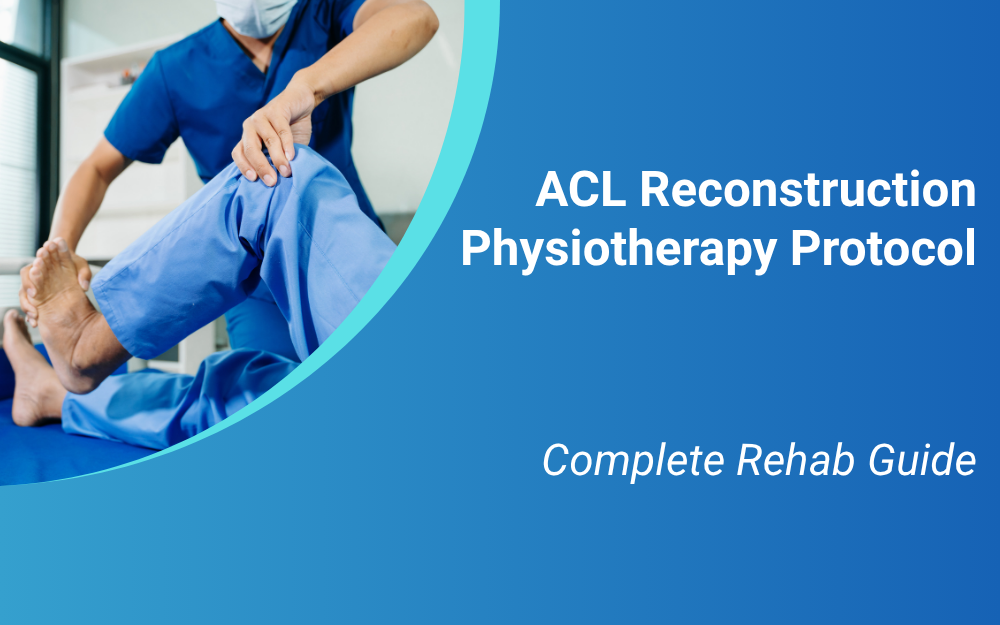
ACL Reconstruction Physiotherapy Protocol is a structured rehabilitation plan followed after ACL surgery to restore knee strength, stability, flexibility, and movement safely. The protocol usually progresses through different recovery phases over 6–9 months and includes pain management, mobility exercises, muscle strengthening, balance training, and gradual return-to-sports rehabilitation.
What Is ACL Reconstruction Physiotherapy Protocol?
An ACL reconstruction physiotherapy protocol is a medically guided rehabilitation program designed for patients recovering after anterior cruciate ligament (ACL) reconstruction surgery.
The protocol helps patients:
- Reduce pain and swelling
- Restore knee movement
- Improve muscle strength
- Regain balance and coordination
- Prevent stiffness
- Safely return to daily activities and sports
Rehabilitation is considered one of the most important parts of successful ACL recovery.
Why Is Physiotherapy Important After ACL Reconstruction?
Physiotherapy after ACL surgery helps the reconstructed ligament heal while gradually restoring knee function.
Without proper rehabilitation, patients may develop:
- Knee stiffness
- Muscle weakness
- Instability
- Poor walking mechanics
- Reduced athletic performance
- Increased risk of re-injury
A structured physiotherapy protocol improves long-term recovery outcomes and supports safer return to activity.
What Happens During the Early Phase of ACL Rehabilitation?
The first few weeks after ACL reconstruction focus on reducing swelling, protecting the graft, and restoring basic knee movement.
Main goals during the early phase:
- Control swelling and inflammation
- Improve knee extension
- Activate quadriceps muscles
- Begin gentle walking
- Protect the reconstructed ligament
Common early ACL rehab exercises:
- Ankle pumps
- Heel slides
- Quad sets
- Straight leg raises
- Assisted knee bending
Patients may initially use braces or crutches depending on surgical recommendations.
What Is the ACL Reconstruction Recovery Timeline?
| Rehabilitation Phase | Timeline | Primary Goal |
| Phase 1: Protection & Pain Control | Week 1–2 | Reduce swelling and restore extension |
| Phase 2: Mobility Recovery | Week 2–6 | Improve flexibility and walking |
| Phase 3: Strength Building | Week 6–12 | Increase muscle strength |
| Phase 4: Balance & Stability | Month 3–4 | Improve coordination and control |
| Phase 5: Functional Training | Month 4–6 | Prepare for higher activities |
| Phase 6: Return to Sports | Month 6–9 | Safe sports-specific rehabilitation |
Recovery timelines vary based on age, fitness level, graft healing, associated injuries, and rehabilitation consistency.
Which Exercises Are Common in ACL Reconstruction Physiotherapy?
Early Rehabilitation Exercises
These exercises focus on mobility and muscle activation.
Common exercises include:
- Heel slides
- Quad sets
- Straight leg raises
- Calf pumps
- Assisted knee extension
Intermediate Strengthening Exercises
As healing improves, strengthening exercises are gradually introduced.
Examples include:
- Mini squats
- Step-ups
- Stationary cycling
- Hamstring strengthening
- Resistance band exercises
Advanced ACL Rehabilitation Exercises
Advanced rehabilitation focuses on dynamic movement and sports preparation.
These may include:
- Balance drills
- Single-leg exercises
- Agility training
- Controlled jumping
- Running progression
- Direction-change training
Advanced exercises should only begin under orthopedic or physiotherapy supervision.
What Are the Signs of Good ACL Recovery?
Successful ACL rehabilitation often includes gradual improvement in:
- Walking comfort
- Knee movement
- Muscle strength
- Swelling reduction
- Joint stability
- Balance and confidence
Patients should notice steady improvement without persistent instability or severe swelling.
Which Activities Should You Avoid After ACL Reconstruction?
Certain movements may place excessive stress on the healing graft during early recovery.
| Activity to Avoid | Why It Can Be Risky | Safer Alternative |
| Running too early | Increases graft stress | Stationary cycling |
| Deep squats | Excessive knee loading | Partial squats |
| Pivoting sports | Risk of re-tear | Straight-line walking |
| Jump training | High ligament impact | Balance exercises |
| Sudden twisting | Causes instability | Controlled strengthening |
| Heavy weightlifting | Delays healing | Gradual resistance training |
Following the rehabilitation timeline carefully reduces complications and supports graft healing.
How Long Does It Take to Walk Normally After ACL Surgery?
Most patients begin assisted walking within the first few days after surgery.
Normal walking patterns often improve gradually over:
- 2–6 weeks for basic walking
- 3–4 months for functional mobility
- 6–9 months for sports activities
Recovery depends on muscle strength, swelling control, pain levels, and physiotherapy progress.
When Can Patients Return to Sports After ACL Reconstruction?
Return-to-sports decisions are based on functional recovery rather than only time after surgery.
Most orthopedic specialists evaluate:
- Quadriceps strength
- Knee stability
- Balance control
- Running mechanics
- Jump testing
- Agility performance
Many athletes return to sports between 6–9 months after surgery with structured rehabilitation.
Can Physiotherapy Help Avoid ACL Re-Injury?
Yes. Structured physiotherapy significantly reduces the risk of future ACL injuries.
Rehabilitation helps improve:
- Muscle coordination
- Landing mechanics
- Balance control
- Knee stability
- Movement awareness
Poor rehabilitation is one of the leading causes of persistent instability and repeat ACL injuries.
What Are the Warning Signs During ACL Rehabilitation?
Patients should consult their orthopedic specialist if they develop:
- Increasing swelling
- Severe knee pain
- Fever or redness
- Knee locking
- Persistent instability
- Difficulty straightening the knee
- Sudden loss of movement
Early evaluation helps prevent long-term complications.
ACL Reconstruction Physiotherapy vs General Knee Exercises
| Feature | ACL Reconstruction Physiotherapy | General Knee Exercises |
| Purpose | Post-surgical recovery | General fitness |
| Supervision | Medically guided | Usually independent |
| Progression | Structured phases | Flexible routines |
| Knee Protection | High priority | Variable |
| Sports Preparation | Included | Not always included |
| Re-Injury Prevention | Core focus | Limited focus |
When Should You See an Orthopedic Specialist?
You should consult an orthopedic specialist if you experience:
- Knee instability after injury
- Recurrent knee buckling
- Persistent swelling
- Difficulty returning to sports
- Pain after ACL surgery
- Delayed rehabilitation progress
- Limited knee movement
Early intervention improves recovery outcomes and helps avoid long-term joint damage.
Conclusion
A structured ACL Reconstruction Physiotherapy Protocol is essential for restoring knee strength, stability, and confidence after ACL surgery. Consistent rehabilitation and timely follow-up can significantly improve recovery outcomes and help patients return safely to their daily activities and sports.
Learn more in Joint Replacements: A Patient’s Handbook
About Dr. Narayan Hulse
Dr. Narayan Hulse is a Senior Orthopaedic and Joint Replacement Surgeon and Senior Director of Orthopaedics at Fortis Hospitals, Bangalore, with 7,000+ successful joint replacement surgeries to his credit. He specializes in ACL reconstruction, robotic knee replacement, and advanced orthopedic rehabilitation.
Frequently Asked Questions About ACL Reconstruction Physiotherapy Protocol
How long is physiotherapy needed after ACL reconstruction?
Most patients require structured physiotherapy for approximately 6–9 months after ACL reconstruction surgery. Early phases focus on swelling reduction and movement restoration, while later phases include strength training, balance improvement, running progression, and sports rehabilitation. Recovery duration varies depending on healing, fitness level, and rehabilitation consistency.
Can I walk immediately after ACL reconstruction surgery?
Many patients begin assisted walking within a few days after surgery using crutches or braces if needed. Weight-bearing recommendations depend on the surgical technique, associated injuries, and orthopedic advice. Walking progression is usually gradual to protect the healing graft while restoring mobility safely.
What is the most important phase of ACL rehabilitation?
The early rehabilitation phase is critical because it focuses on swelling control, restoring knee extension, and activating the quadriceps muscles. However, advanced strengthening and return-to-sports phases are equally important for preventing re-injury and restoring full knee stability.
Is ACL rehabilitation painful?
Some discomfort and muscle soreness are common during rehabilitation, especially after exercises and strengthening sessions. However, severe pain, increasing swelling, or instability should not be ignored. A properly guided physiotherapy program aims to improve recovery gradually without overloading the healing knee.
When can I return to running after ACL surgery?
Light jogging or running is often introduced around 3–5 months after surgery depending on strength recovery, balance, swelling control, and orthopedic clearance. Patients should avoid rushing into sports activities before adequate muscle control and joint stability are restored.
Can ACL physiotherapy reduce the risk of another injury?
Yes. ACL physiotherapy improves muscle coordination, knee stability, balance, and movement mechanics. Structured rehabilitation helps reduce the risk of repeat ACL tears and improves long-term sports performance. Proper recovery is essential for both athletes and physically active individuals.
Do all ACL injuries require surgery?
Not all ACL injuries require surgery. Partial tears with good knee stability may sometimes improve with physiotherapy and activity modification. However, complete ACL tears causing instability, especially in athletes or active patients, often require reconstruction surgery for long-term knee function.